
You don’t need more confidence before you start: You build confidence by starting

What if the thing standing between you and the life you want isn't a lack of confidence, but waiting for confidence to show up first?
Maybe you've been thinking about speaking up at work, applying for the job, going somewhere alone, setting a boundary, trying a new class, wearing the outfit you actually love, or introducing yourself to someone new.
You might tell yourself you'll do it when you feel ready. And it makes sense. We are often taught to think, “Confidence comes first.”
Feel confident → take the leap → succeed.
Easy, right? Not quite. Real life is usually messier. Sometimes you take the leap while your stomach is in knots, your inner critic is loud, and you're wondering what you're doing.
And then you discover something important: confidence can be built on the other side of trying.
Confidence is less of a feeling you need to wait for and more of a relationship you build with yourself, one small act of courage at a time.

Confidence Can Come After the Courage
Think about the last time you did something that scared you.
Maybe your hands were shaking. Maybe you replayed the conversation afterward. Maybe you almost talked yourself out of going. And yet, you did it.
That experience gives you something you cannot get from simply thinking about doing the thing: Evidence!
Psychologist Albert Bandura's work on self-efficacy helps explain this. Self-efficacy refers to our belief that we can successfully handle a particular situation (Bandura, 1977). One important way these beliefs develop is through mastery experiences: trying something, getting through it, and learning that we are capable of handling more than we thought. Research on self-efficacy consistently points to these direct experiences as an important source of confidence.
So then the cycle becomes:
You try → you learn → you build evidence → you trust yourself a little more → you try again.
You don’t have to feel confident to take the first step. You just have to take it.
The Problem With Waiting Until You Feel Ready
Waiting can feel reasonable. Sometimes preparation is helpful. But sometimes, “I'm not ready yet” becomes a convincing way of staying comfortable.
You wait for confidence. Confidence does not arrive. So you wait a little longer.
Eventually, the fact that you haven't done the thing can start to feel like evidence that you cannot do the thing.
Instead, ask yourself: “What could I do while still feeling unsure?”
You do not need to eliminate the nerves. You just need to decide whether they get to make the decision for you.
Start Smaller Than You Think
Building confidence does not mean forcing yourself into the most intimidating version of a situation.
Start small.
If speaking up feels uncomfortable, share one thought in a meeting. If you want to make new friends, attend one event and introduce yourself to one person. If you've been thinking about a career change, send one email or research one opportunity. If you want to feel more comfortable doing things alone, take yourself for coffee. Go for a walk. Sit in a bookstore. Try the class you've been saving for “someday.”
You are not trying to prove that you are fearless. You are giving yourself opportunities to build evidence that you can handle discomfort.
Your Inner Cheerleader Matters
There is another piece of confidence that deserves more attention: the way you talk to yourself while you are learning.
Imagine trying something new with someone beside you constantly criticizing you. You probably wouldn't want that person cheering you on. Yet sometimes, that is the voice we bring with us when we step outside our comfort zone.
Self-compassion offers a different approach. It means responding to yourself with kindness and understanding when things are difficult, rather than immediately turning toward self-criticism (Neff, 2023). Research has found that self-compassion can support motivation and self-improvement. In a set of experiments, people who responded to their mistakes with self-compassion showed greater motivation to improve afterward (Breines & Chen, 2012).
Being kind to yourself does not mean letting yourself off the hook. It can actually make it easier to get back up and try again.
Your inner voice can remind you that it's okay to feel nervous, and you can still choose to try.
You are already asking a lot of yourself when you step outside your comfort zone. You do not need to become afraid of your own mistakes, too.
Let Fall Be Your Little Confidence Reset
There is something about fall that makes a fresh start feel possible.
The season changes. School starts again. Work routines shift. We pull our favourite sweaters out of the closet and settle into a different rhythm.
You do not need to reinvent yourself this Fall. Maybe you can simply choose one thing that makes your world a little bigger.
Take yourself on a fall hike. Try a new activity around Ottawa. Go paddleboarding on your own. Wear the outfit you love instead of the one you think will make you blend in. Raise your hand in class. Introduce yourself to someone new. Ask the question. Apply for the position. Say no when you mean no.
None of these things have to be life-changing.
Confidence is often built in these tiny moments when you decide to participate in your own life, even when a part of you would rather stay comfortable.

Look for Your Qualities in the People You Admire
Sometimes we look at confident people and think, “I wish I were more like them.”
But look a little closer.
What exactly do you admire? Their honesty? Their warmth? Their creativity? Their willingness to take up space? Their curiosity? Their resilience?
Then ask yourself: “Where do I already see a little bit of that in me?”
Role models can become mirrors. They can help us notice qualities we overlook in ourselves because they feel ordinary to us.
You do not need to become someone else to become more confident. Sometimes, you need to start noticing the confidence that is already there.
Confidence Is Not Certainty
Maybe the biggest misconception about confidence is that it means knowing everything will work out. It doesn't.
You can feel confident and still get rejected. You can set a boundary and have someone dislike it. You can try something new and realize you are not very good at it yet. You can make a mistake or change your mind.
None of these things mean you weren't confident enough.
Real confidence is not “Nothing bad will happen.”
It' is closer to: “Whatever happens, I trust myself to respond.”
And that kind of trust takes time.
A few books for your confidence shelf
Sometimes confidence grows through the voices we choose to keep around us. A good book can offer a new perspective, encouragement, or simply the feeling that someone else has wrestled with some of the same questions.
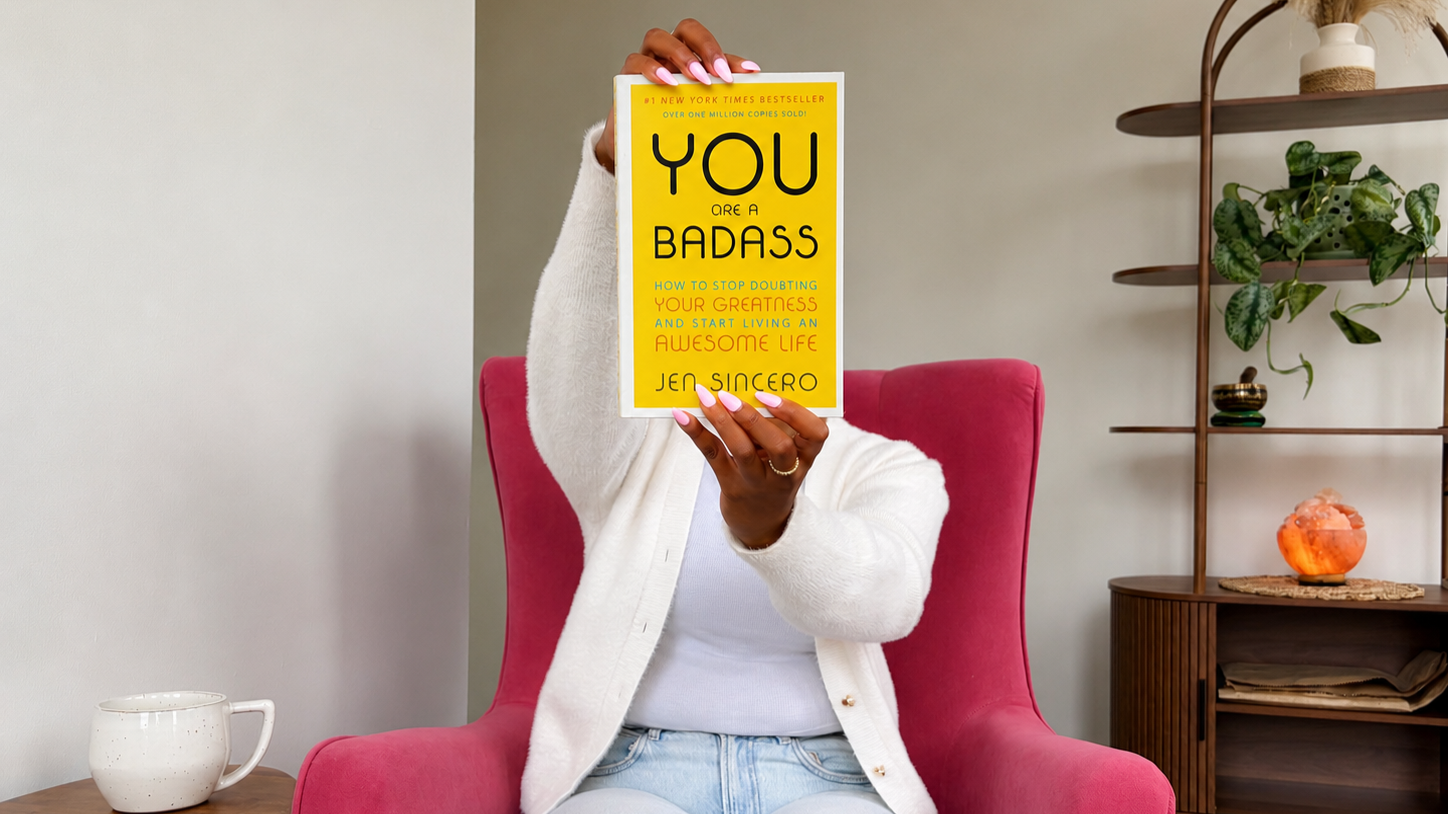
If you're looking for something to bring along this fall, you might pick up You Are a Badass by Jen Sincero or Untamed by Glennon Doyle.
And perhaps a little affirmation to carry with you as you move through this season:
“Try and fail, but never fail to try.”
— John Quincy Adams
A reminder that failure is not a sign that we aren't capable. It’s often part of the process of becoming more confident, trying new things, and learning what we’re capable of.
You don't have to get it right every time. You just have to be willing to keep trying.
Sometimes one sentence, one perspective, or one reminder is enough to make us see ourselves a little differently.
So, What are you waiting for?
Maybe there is something you've been putting off because you do not feel confident enough.
Before deciding you need more confidence, ask yourself:
“What am I waiting to feel before I start?”
“What is one small thing I could do this week?”
“What might I learn by trying?”
“When have I surprised myself before?”
“What would I say to a friend who was scared to try?”
Give yourself another opportunity to discover what you can do.
Do it with shaky hands. Do it alone. Do it before you feel ready.
And maybe, one day, you’ll look back and realize that all those tiny moments were adding up. You were becoming someone who trusts themself. Someone who can sit with discomfort. Someone who no longer needs to be perfect to participate.
Because sometimes, you don’t find confidence before you begin. Sometimes, you begin, and confidence finds you along the way.
Where to go from here?
Have you been holding yourself back from participating more fully in your own life? Therapy can offer a supportive space to work through self-doubt, strengthen self-trust and self-compassion, and take meaningful steps toward the life you want.
At Cup of Tea Psychotherapy, you can expect an inviting and compassionate space to help you build confidence through small, intentional changes, recognize the strengths you already have, and develop practical tools for navigating life’s challenges.
Start small. If you're curious about how therapy can support you, we invite you to take that first step and reach out.
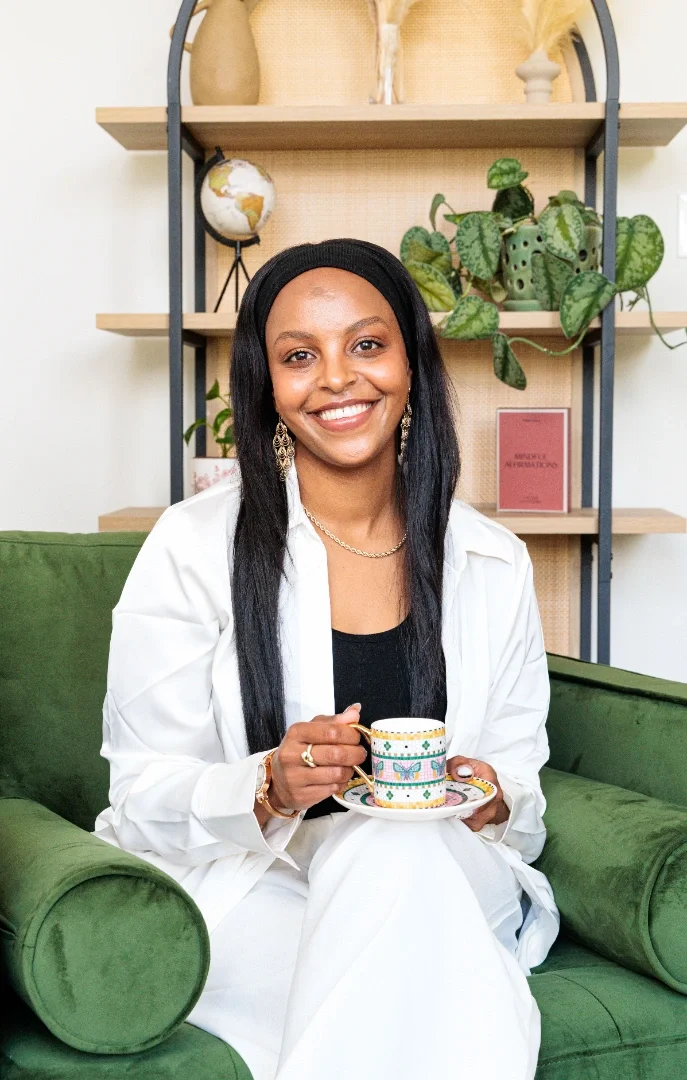
—Blog post written by Yocabed Semere, Registered Psychotherapist (Qualifying) at Cup of Tea Psychotherapy


About Yocabed
Yocabed Semere is a Registered Psychotherapist (Qualifying) at Cup of Tea Psychotherapy. She works with young adults and adults who may appear to have it all together while privately navigating anxiety, overwhelm, self-doubt, or the pressure to meet expectations. Through a warm, collaborative, and culturally responsive approach, Yocabed supports clients in navigating life transitions, identity, and personal growth while developing greater clarity, self-trust, confidence, and emotional well-being.
References
Bandura, A. (1977). Self-efficacy: Toward a unifying theory of behavioral change. In psycnet.apa.org. https://psycnet.apa.org/doiLanding?doi=10.1037%2F0033-295X.84.2.191
Neff, K. D. (2023). Self-compassion: Theory, method, research, and intervention. Annual Review of Psychology, 74(1), 193–218. https://doi.org/10.1146/annurev-psych-032420-031047
Breines, J. G., & Chen, S. (2012). Self-compassion increases self-improvement motivation. Personality and Social Psychology Bulletin, 38(9), 1133–1143. https://doi.org/10.1177/0146167212445599