
Building a compassionate self Through compassion-focused therapy

“How do you treat yourself when things go wrong?”
A question raised by Dr. Paul Gilbert, founder of Compassion-Focused Therapy (CFT) (CBT Clinic London, 2011).
Compassion-Focused Therapy (CFT) uses an evolutionary perspective to understand how the human brain has developed and why some of our natural responses can be unhelpful in modern life (The Weekend University, 2021).
A lot of what we think, feel, and do is shaped by deeply ingrained survival systems that evolved to keep us safe. CFT helps us understand why we react the way we do. This can make it easier to accept our thoughts and emotions and respond to ourselves with compassion rather than self-criticism.

Understanding the brain through cft
The “old brain”
Older brain systems, such as the limbic system, manage basic emotions like fear, anger, and anxiety. These instinctual emotions are shared with other animals and play an important role in our survival (Aikman, 2022; The Weekend University, 2021).
The “New Brain”
Newer thinking systems, such as the prefrontal cortex, support planning, analysis, and future thinking. These abilities set humans apart from other animals. However, they can also contribute to rumination and self-criticism (Aikman, 2022; The Weekend University, 2021).
How does this play out in the real world?
Imagine you're out for a walk and suddenly wonder if you left the stove on. That feeling of panic is the survival part of your “old brain” flagging a potential danger: “Problem!” The thinking part of your “new brain” chimes in, replaying the moment, questioning yourself, and imagining worst-case scenarios. You become fixated on the problem, and it’s hard to reassure yourself, especially when the self-criticism kicks in: “Why didn't I just double-check?” Before long, you’re spiraling into a self-critical loop of anxiety, shame, and self-doubt (Aikman, 2022).
Sound familiar? You're not alone. Our brains evolved to keep us safe and alert, not necessarily calm (“Compassion Self Help,” n.d.). We’re still wired for survival, but the world we live in has changed, meaning the “new brain” that helps us solve problems can also create more.
How do we break the loop?

3 Emotion regulation systems
According to Dr. Paul Gilbert, our emotions are shaped by three interacting systems (Gilbert, 2014):
1. Drive and Achievement
This system motivates us to pursue goals and seek rewards. Brain chemicals, such as dopamine, support feelings of excitement, desire, and engagement (Comnios, n.d.; Gilbert, 2014). However, when overactive it can contribute to perfectionism, exhaustion, and burnout (Gilbert, 2014; Moloney-Gibb et al., 2025).
2. Soothing and contentment
This system helps us feel safe, connected, and calm. It involves feel-good chemicals, such as opiates and oxytocin, which support feelings of contentment, well-being, and care (Comnios, n.d.; Gilbert, 2014). It brings balance to the threat and drive systems, allowing us to rest, recover, and regulate our emotions (Gilbert, 2014; Moloney-Gibb et al., 2025).
3. Threat and Self-protection
This is our fight-or-flight system, designed to detect danger and keep us safe. It involves stress hormones, such as cortisol and adrenaline, which trigger feelings of fear, anger, anxiety, and disgust (Comnios, n.d.; Gilbert, 2014). These responses can make us want to avoid things that feel painful or uncomfortable. When overactive, this system can contribute to excessive worry, self-criticism, and other emotional challenges (Gilbert, 2014; Moloney-Gibb et al., 2025).
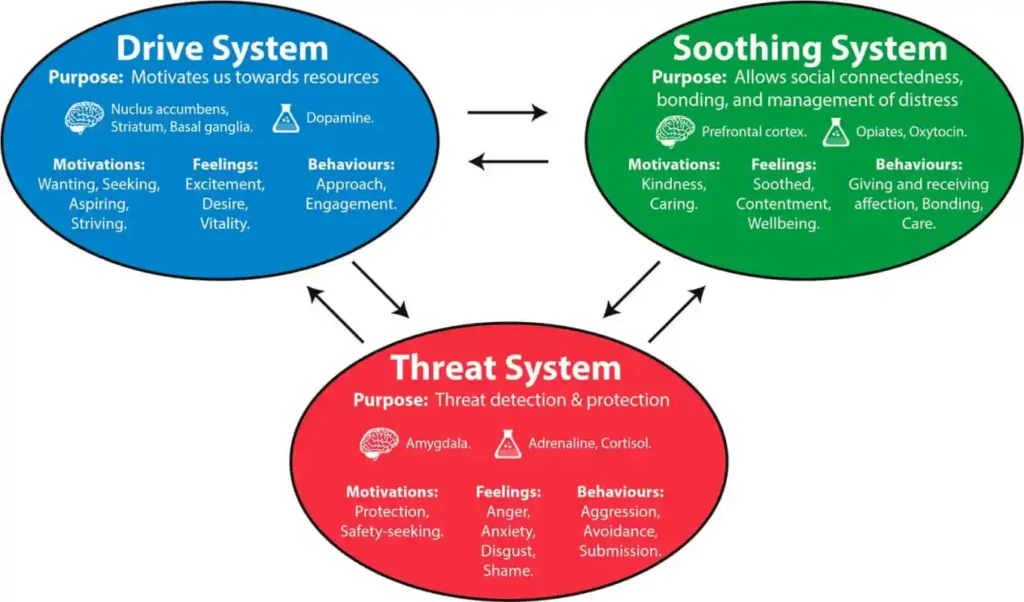
Figure 1. The Three Circles Model: Threat, Drive, and Soothe. Reproduced from Stott (2025).
Many of us spend much of our time stuck in threat and drive modes, worrying, striving, or getting caught up in self-criticism. Over time, the soothing system can become underused (National Institute for the Clinical Application of Behavioral Medicine, n.d.).
Compassion helps rebalance this by activating the soothing system. This allows us to step back from threat-based states, slow down, and respond with more clarity and care (CBT Clinic London, 2011; Moloney-Gibb et al., 2025).
Why We Become Self-Critical
Self-criticism is a powerful trigger for our threat system (Gilbert, 2014). It shows up as a harsh inner voice that we often call the “mind bully.”
This mind bully can become constant and hostile, carrying feelings of shame, guilt, anger, and unworthiness (Wakelin et al., 2022). Even self-soothing practices can feel unsafe, as though letting our guard down might lead to something bad (Gilbert, 2014).
Self-criticism often develops early through experience and social learning (Aronfreed, 1964). Stress, trauma, or repeated exposure to criticism can keep the nervous system in a threat-based state, making it harder to develop inner safety (‘Compassion Self Help,” n.d.; Gilbert, 2014; Psychology Today, n.d.). Gradually, these patterns become part of our self-talk.
The good news is that these patterns are learned, not fixed!
What is compassion-focused therapy?
Compassion is the ability to respond to suffering with understanding, kindness, and non-judgment (Gilbert, 2014; Leaviss & Uttley, 2015). Compassion-Focused Therapy (CFT) supports the development of a “Compassionate Self” (Gilbert, 2014; Psychology Today, n.d.). CFT is especially helpful for people experiencing high shame and self-criticism, as developing a Compassionate Self can help individuals stay engaged in therapy and make progress by increasing their ability to tolerate and cope with difficult emotions (Leaviss & Uttley, 2015; Wakelin et al., 2022).
Did I leave the stove on?
Let's revisit the example of wondering whether you left the stove on (Aikman, 2022). Instead of getting pulled into panic or a self-critical spiral, you pause and notice what's happening: "My threat system is trying to protect me, but there's no evidence that anything has gone wrong." Rather than criticizing yourself, you respond with understanding and non-judgment: "Of course I'm feeling worried right now. Next time, I might slow down and give myself a bit more time." You gently bring yourself back to the present instead of getting stuck in endless "what if" questions: "I may not feel 100% certain right now, and that's okay. What’s the most helpful thing I can do at this moment?" From a compassionate stance, you might choose a calm, practical response, such as calling a neighbour or sending a message to a co-worker to let them know you may be a few minutes late while you check.
CFT helps us notice when the threat system is driving the the mind bully, and teaches us how to respond in a different way. By responding with compassion rather than self-criticism, you can soothe the threat system, regulate difficult emotions, and choose actions that support your overall well-being.
The Compassionate Self
The Compassionate Self is a grounded inner presence we can return to when things feel difficult. It has no expectations about what you “have” to do, or “should” do. Instead, it brings wisdom, strength, encouragement, care, and commitment (Steindl, 2026).
Think of it as a friendly companion sitting beside you, not fixing or judging, but supporting you with kindness, acceptance, and understanding. It gently reminds you, “It’s not your fault. Your brain was built for survival, but it’s your responsibility to continue to care for yourself.” It also asks, “Are you being helpful or harmful right now?” (Steindl, 2026; The Weekend University, 2021).
How does the body respond to the compassionate self?
Relaxation in the jaw, shoulders, and chest
Feeling of warmth and openness
Reduced heart rate, perspiration, and blood pressure
Sense of being grounded, stable, rooted through the sit-bones and feet
Relaxed posture, open chest, and relaxed facial expression
Slow steady breathing, and longer exhales
A kinder internal dialogue
Increased oxytocin (safety, connection, and care)
Decreased cortisol (stress hormone)
Disengagement from the threat system

How do I Practice it?
Compassion is a skill that can be trained (Steindl, 2026). When we notice we’re in threat mode, we can use practices like meditation, journaling, and grounding techniques to engage the body’s soothing system and build a greater sense of self-trust and safety.
While these practices can be therapeutic, they’re not a replacement for therapy. These simple, research-informed practices can help you develop more compassionate ways of responding to yourself during difficult moments, strengthening emotional resilience over time.
our recommendations
safe-place guided meditations to develop a deeper sense of safety:
Mindful Journaling to process emotions, reduce self-critical spirals,and return attention to the present moment:
Three minute brain dump(Whiteboard Wonders, 2023). At the start or end of your day, write down anything on your mind without editing or filtering. This simple practice helps us notice our thoughts and feelings as they are.
Grounding practices to reconnect with your body and calm your nervous system:
Drawing your breath (Erica Pang Art, 2021). Take a few minutes to visualize your breath on a page, tracing each inhale and exhale. Notice the natural sensations of your breath, and follow its movement on the page. Written instructions (Mehlomakulu, 2017).
5-4-3-2-1 grounding method. Anchor yourself in the present moment by naming 5 things you can see, 4 things you can hear, 3 things you can feel, 2 things you can smell, and 1 thing you can taste. This can be done anywhere! (Calm, n.d.).
Spending time in nature (Streaming Birds, 2023). Natural environments support calmness, relaxation, and overall well-being (Canadian Psychological Association, 2024). This could involve listening to the sounds of water, noticing trees and animals on your way to work, or bringing plants into your home. If you can't get outside, nature photos, videos, and artwork can still be beneficial! Just a few minutes of exposure has been shown to improve mood and reduce feelings of stress (Canadian Psychological Association, 2024).
supporting you with compassion-focused therapy
At first glance, it might seem simple to just “be more compassionate.” But in practice, this takes time. Our brains are shaped by survival systems that more easily hold onto negative experiences than positive ones, keeping the “mind bully” on high alert (Gilbert, 2014).
Compassion is a skill that can be learned, practiced, and strengthened over time. As we move from self-criticism to compassionate self-correction, we learn to validate our experiences and respond to difficulty from a place of care, curiosity, and emotional balance (CBT Clinic London, 2011).
It takes courage to face the mind bully, and you don’t have to do it alone. At Cup of Tea Psychotherapy, our team has extensive training and experience in Compassion-Focused Therapy (CFT). Here, in a safe, supportive space, you can begin to slow down, heal, and reconnect with the more tender parts of yourself.
—Blog post written by Annika Whitford, Creative Marketing Specialist at Cup of Tea Psychotherapy



About Annika
Annika is the Creative Marketing Specialist at Cup of Tea Psychotherapy. With an Honours degree in Psychology and a strong background in media communications, she blends research-informed insights, mental health expertise, storytelling, and design to create meaningful, client-centered content across our digital platforms. Her work embodies the warmth, energy, and care of our team, bringing the Cup of Tea Psychotherapy vision to life.
References
Aikman, L. (2022, March 18). Compassion focused therapy: our tricky brains [Video]. YouTube. www.youtube.com/watch?v=CrkASfR28Eg.
Aronfreed, J. (1964). The origin of self-criticism. Psychological Review, 71(3), 193-218. https://doi.org/10.1037/h0047689
Calm. (n.d.). 5-4-3-2-1 grounding: How to use this simple technique for coping with anxiety. https://www.calm.com/blog/5-4-3-2-1-a-simple-exercise-to-calm-the-mind
Canadian Psychological Association. (2024, April 15). “Psychology works” fact sheet: Benefits of nature exposure. https://cpa.ca/psychology-works-fact-sheet-benefits-of-nature-exposur/
CBT Clinic London. (2011, April 9). Compassion focused therapy with Dr Paul Gilbert [Video]. YouTube. https://www.youtube.com/watch?v=4kF7FRy0_xs
Comnios, A. (n.d.). Your brain’s 3 emotion regulation systems. Mindfulness & Clinical Psychology Solutions. https://mi-psych.com.au/your-brains-3-emotion-regulation-systems/
Compassion Self Help. (n.d.). https://www.getselfhelp.co.uk/compassion-self-help/#google_vignette
Erica Pang Art. (2021, May 14). Draw your breath art exercise [Video]. YouTube. https://www.youtube.com/watch?v=sgB2Cwcr9s8
Gilbert, P. (2014). The origins and nature of compassion focused therapy. British Journal of Clinical Psychology, 53(1), 6–41. https://doi.org/10.1111/bjc.12043
Lay, P. (2023, December 3). Grounding meditation: safe place visualisation [Video]. YouTube. https://www.youtube.com/watch?v=LomAPbJ6Huk
Leaviss, J., & Uttley, L. (2015). Psychotherapeutic benefits of compassion-focused therapy: An early systematic review. Psychological Medicine, 45(5), 927–945. https://doi.org/10.1017/S0033291714002141
Mehlomakulu, C. (2017, August 6). Drawing your breath - a mindful art exercise. Creativity in Therapy. https://creativityintherapy.com/2017/08/drawing-your-breath-a-mindful-art-exercise/
Moloney-Gibb, D., Sherwell, C. S., Lynn, S., Day, J., & Kirby, J. N. (2025). Testing a digital and interactive scale (the three circles) to assess emotion regulation. Scientific Reports, 15(1), Article 16351. https://doi.org/10.1038/s41598-025-94706-7
National Institute for the Clinical Application of Behavioral Medicine. (n.d.). Applying the 3 circles model of emotion to help clients heal shame. https://www.nicabm.com/3circles/
Psychology Today. (n.d.). Compassion-focused therapy. https://www.psychologytoday.com/ca/therapy-types/compassion-focused-therapy
Roberts, D. (2025, August 11). Safe place imagery: Guided meditation for calm, safety & inner peace [Video]. YouTube. https://www.youtube.com/watch?v=vQKZIMno5Fc
Steindl, S. (2026, January 17). Understanding the compassionate self in compassion focused therapy [Video]. YouTube. https://www.youtube.com/watch?v=ALV4hRiUKMc&t=4s
Streaming Birds. (2023, October 9). 8 hours of relaxing nature sounds and gentle birdsong [Video]. YouTube. https://www.youtube.com/watch?v=aVS7PHjSxdI
Stott, N. (2025, November 2). The three circles model: threat, drive, and soothe [Figure]. https://www.drnataliestott.com/blog/the-three-circles-threat-drive-soothe
The Weekend University. (2021, April 1). The simple secret to self compassion [Video]. Youtube. https://www.youtube.com/watch?v=WzPyYitoiq4
Wakelin, K. E., Perman, G., & Simonds, L. M. (2022). Effectiveness of self‐compassion‐related interventions for reducing self‐criticism: A systematic review and meta‐analysis. Clinical Psychology and Psychotherapy, 29(1), 1–25. https://doi.org/10.1002/cpp.2586
Whiteboard Wonders. (2023, May 16). 3 minute timer (Calm music) [Video]. YouTube. https://www.youtube.com/watch?v=LomAPbJ6Huk